Why Sensitive Teeth No Longer Means No Teeth Whitening in Spokane Valley (2026 Guide)


Ever felt a shock that jolts your tooth when you take a drink of cold water or a lick of ice cream? Well, you’re definitely not alone. Tooth sensitivity is a common complaint, and it can be particularly noticeable during rapid temperature changes in areas like Spokane Valley. For years, the assumption has been that teeth whitening would only exacerbate existing sensitivity.
That assumption is being challenged by exciting advancements in dentistry. Today, a brighter smile is not only possible without added discomfort. Modern approaches to teeth whitening are carefully formulated with sensitive patients in mind and have evolved into a safer, gentler path to a radiant smile.
What Causes Tooth Sensitivity in the First Place?
To appreciate why it was previously advised against whitening, one needs to understand what is going on.
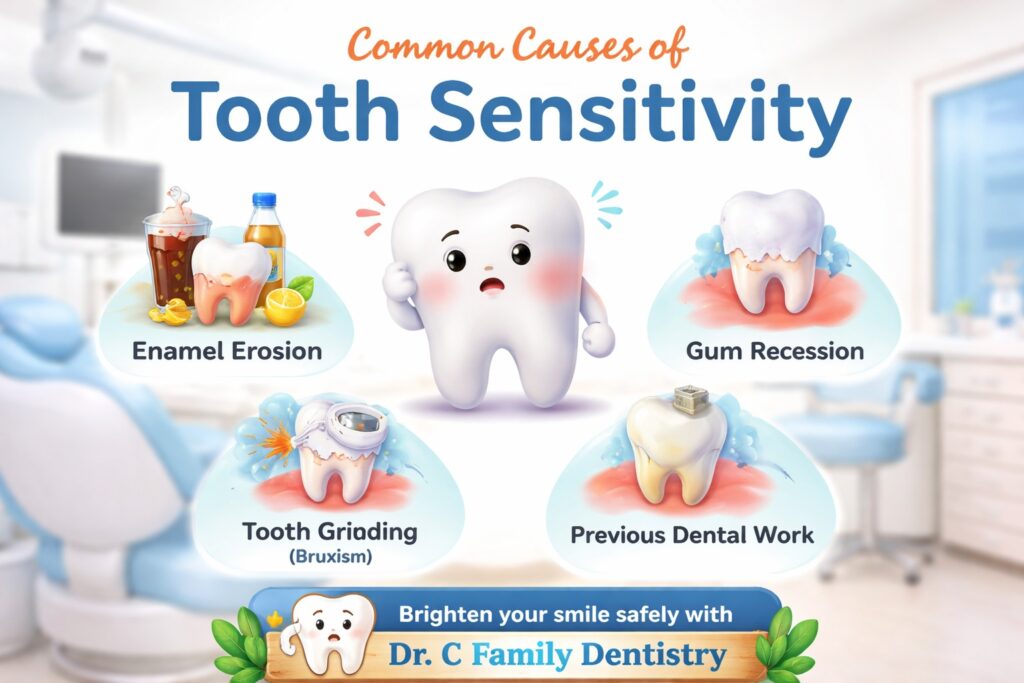
Sensitivity typically occurs when enamel is worn down or the gum tissue surrounding the teeth recedes. This condition exposes the underlying dentin where a network of tiny tubes connects directly to nerve endings in the tooth. When anything hot, cold, or sweet comes in contact with these pathways, you feel the sensation. Here are the most common culprits for causing sensitivity:
- Erosion of enamel from acidic drinks and food products.
- Receding gum lines from improper brushing or naturally occurring aging.
- The natural tendency to grind teeth at night (bruxism).
- Previous work done on the tooth.
Given the temperature shifts in Spokane Valley’s four distinct seasons, one can easily imagine how cold drinks in the winter months, followed by hot cups of coffee or tea in the morning, would have sensitive patients worried about anything further aggravating the mix.
Why Whitening Used to Be a Problem for Sensitive Teeth
Old whitening formulas relied heavily on bleaching agents that penetrated tooth enamel to lift stains. Though this system effectively achieves the desired result of whiter teeth, it also increases tooth sensitivity during the whitening period and potentially for some time afterward.
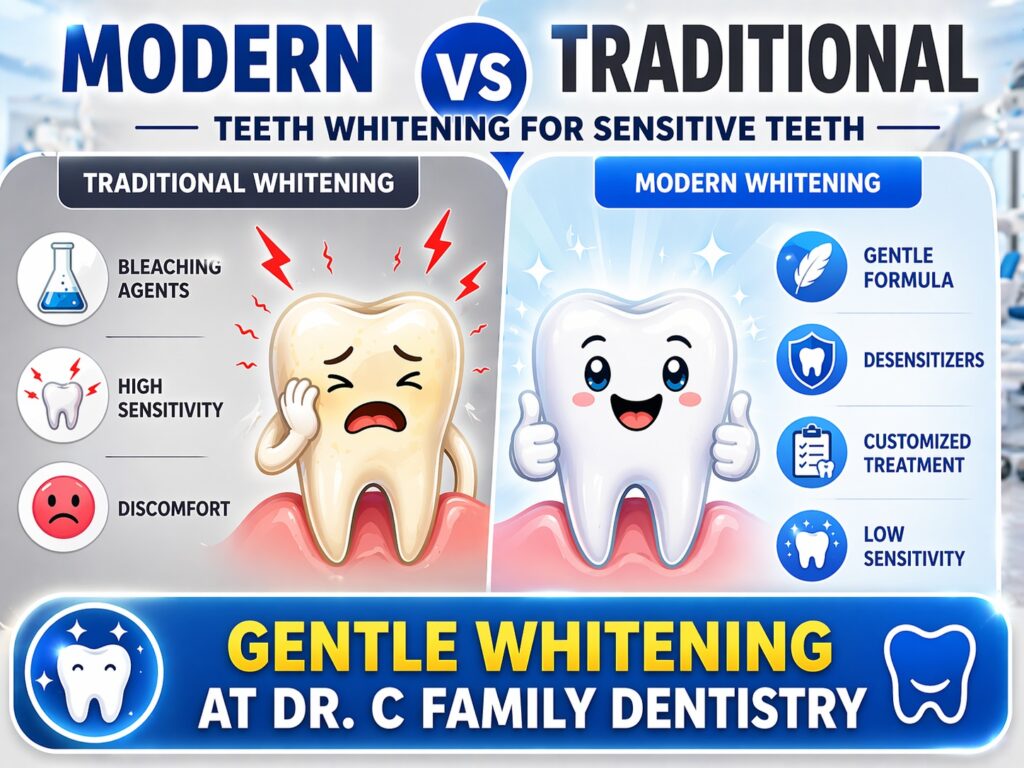
This lack of buffered formulas meant:
- Increased exposure of peroxide to sensitive tooth nerve endings.
- More significant discomfort during treatment.
- Protracted pain during the post-whitening period.
To many, a bright white smile was not worth the compromise of experiencing tooth sensitivity for days or weeks at a time. Many potential patients avoided whitening treatments because of these side effects.
What Changed in 2026?
Modern dental techniques have revolutionized teeth whitening. Today, patients and dentists focus not only on aesthetic outcomes but also on overall patient comfort.
Here’s how things changed:
- Better Whitening Formulations: Newer compounds contain stabilized active ingredients that deliver whitening agents more gently. This provides less trauma to the nerves in the teeth.
- Added Desensitizers: Many modern whitening treatments include compounds like potassium nitrate and fluoride to help desensitize and strengthen the enamel during treatment.
- Targeted Application: Whitening is no longer one-size-fits-all. Cosmetic dentists can now customize your treatment to suit your personal sensitivity level.
- Reduced Exposure Time: Rapid activation techniques allow whitening agents to perform their function more quickly, reducing the time sensitivity has to develop. As a result, tooth whitening is a much more predictable and well-managed procedure.
How Modern Whitening Works for Sensitive Teeth
Modern techniques achieve stain removal while preserving the tooth’s integrity. A typical in-office method, like Zoom! Professional teeth whitening in Spokane Valley uses regulated light activation with special formulations that lift stains efficiently with minimal pain.
What typically occurs:
- You will wear a lip retractor and have a barrier placed around your gums.
- The whitening gel will be applied directly to your teeth.
- Light is used to enhance the whitening gel’s reaction.
- Your dentist will continually monitor you for any signs of discomfort.
Since each element of this process can be adjusted instantly, sensitivity can be addressed immediately.
Signs You’re a Good Candidate for Whitening
Everyone experiences sensitivity differently, but those with mild to moderate cases can undergo safe bleaching treatments.
You’re the right candidate if you:
- Only get occasional sensitivity, not constant irritation.
- Have good gum health with no active decay.
- Wish to get rid of common stains from tea, wine, and coffee.
- Have no recent dental trauma to the teeth.
Discussing your options with your dentist is essential for deciding on the most suitable whitening method.
How to Prepare for a More Comfortable Whitening Session
Preparing properly will minimize teeth sensitivity and make whitening a more enjoyable experience. Try doing these steps before your whitening treatment:
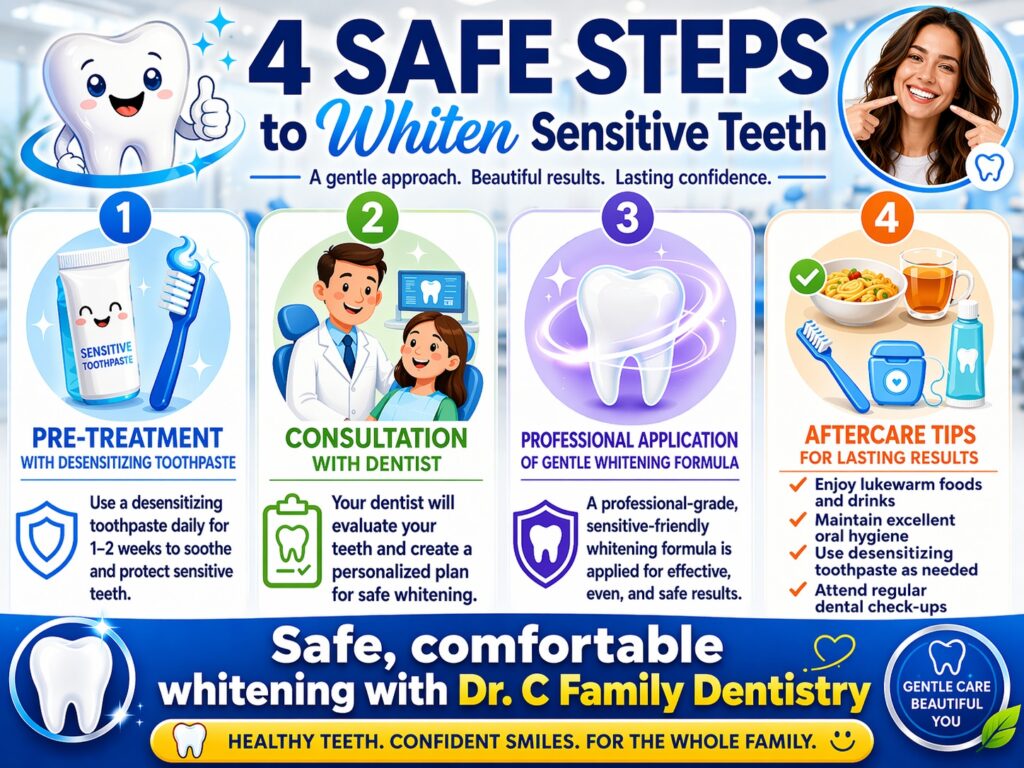
- Brush with a desensitizing toothpaste for two weeks prior to your appointment.
- Avoid extremely acidic drinks and foods.
- Maintain normal oral hygiene routines.
- Talk about your previous dental sensitivity experience to your practitioner.
These steps will help prevent enamel erosion and prevent the nerves in your teeth from reacting so much.
Aftercare Tips to Maintain Comfort and Results
Maintaining good oral health after whitening will not only ensure your teeth look their best but also help control any lingering sensitivity.
- For 24-48 hours after treatment, consume only lukewarm food and drinks.
- Avoid foods and drinks that are known to cause stains, such as coffee or red wine.
- Continue using desensitizing toothpaste.
- Keep to a normal oral hygiene routine.
Maintaining these practices will help keep your teeth white and bright for longer in Spokane Valley, despite the temperature fluctuations.
The Benefits of Professional Teeth Whitening
As mentioned before, over-the-counter options may be widely available, but they also lack personalization. As a result, results are less consistent, or sensitivity becomes more pronounced.
Professional teeth whitening offers:
- A precise application that’s unique to your teeth.
- Stronger yet safe bleaching concentrations.
- Real-time adjustments for any sensitivity or irritation that occurs.
- More predictable and dramatic results.
The entire process, with the latest technologies, is about both efficiency and comfort.
A Brighter Smile Without the Trade-Off
The great difference in 2026 is the mindset of the people. They know that professional teeth whitening does not compromise your sensitivity or your beautiful smile, but will give you both.
If you were not a candidate for whitening in the past because of sensitivity, it may be time to look into options today that can work with you, not against you.
Ready to Reconsider Teeth Whitening?
The search for a brighter smile doesn’t have to be accompanied by pain anymore. With new and improved whitening techniques at Dr. C Family Dentistry, sensitive teeth are taken into account. Each step of your teeth-whitening experience is fine-tuned for controlled, comfortable procedures that deliver noticeable results.
If it’s a whitening treatment that you hesitated about before, you shouldn’t feel that way any longer. Schedule an appointment for a consultation at Dr. C Family Dentistry today. Find out how more advanced whitening procedures can offer a more radiant and more confident smile for you, with very little sensitivity.
Questions People Ask About Teeth Whitening
Can I whiten my teeth if they are very sensitive?
Yes, many people with sensitive teeth can safely whiten them today. Modern treatments include desensitizing agents and controlled application methods. A proper evaluation helps determine the safest approach and ensures that sensitivity is managed before, during, and after the procedure.
How long does sensitivity last after whitening?
Sensitivity is usually temporary and mild with modern techniques. Most people notice it subsiding within 24 to 48 hours. Using desensitizing toothpaste and following aftercare instructions can help minimize discomfort and support faster recovery after treatment.
Are at-home whitening kits safe for sensitive teeth?
Some at-home kits are designed for sensitivity, but they may not offer the same level of control as professional treatments. Without supervision, it’s harder to adjust the process if discomfort occurs. Consulting a provider ensures a safer and more personalized approach.
What ingredients help reduce sensitivity during whitening?
Common desensitizing ingredients include potassium nitrate and fluoride. These help calm nerve responses and strengthen enamel. Many modern whitening systems include these components to improve comfort while still delivering noticeable whitening results.
Will whitening damage my enamel?
When done properly, whitening does not damage enamel. Professional treatments are carefully formulated and applied to protect tooth structure. Following recommended guidelines and avoiding overuse helps maintain enamel integrity while achieving a brighter smile.
How often can I safely whiten sensitive teeth?
The frequency depends on your individual needs and oral health. Many people benefit from occasional touch-ups rather than frequent treatments. A provider can recommend a schedule that maintains results while keeping sensitivity under control.