
Dental Implants vs. Dentures vs. Bridges

Losing a tooth changes more than your smile. It affects how you eat, speak, and feel about yourself. If you’re weighing dental implants vs. dentures vs. bridges and wondering which fits your life in Airway Heights, you’re asking exactly the right question. At Dr. C Family Dentistry, Dr. Danny Snyder helps patients compare these options honestly — so you can make the best choice for your health and your lifestyle.
Understanding Your Three Main Tooth Replacement Options
Before comparing, it helps to understand what each option actually is. Each solution works differently and suits different situations. Knowing the basics puts you in a stronger position to decide.
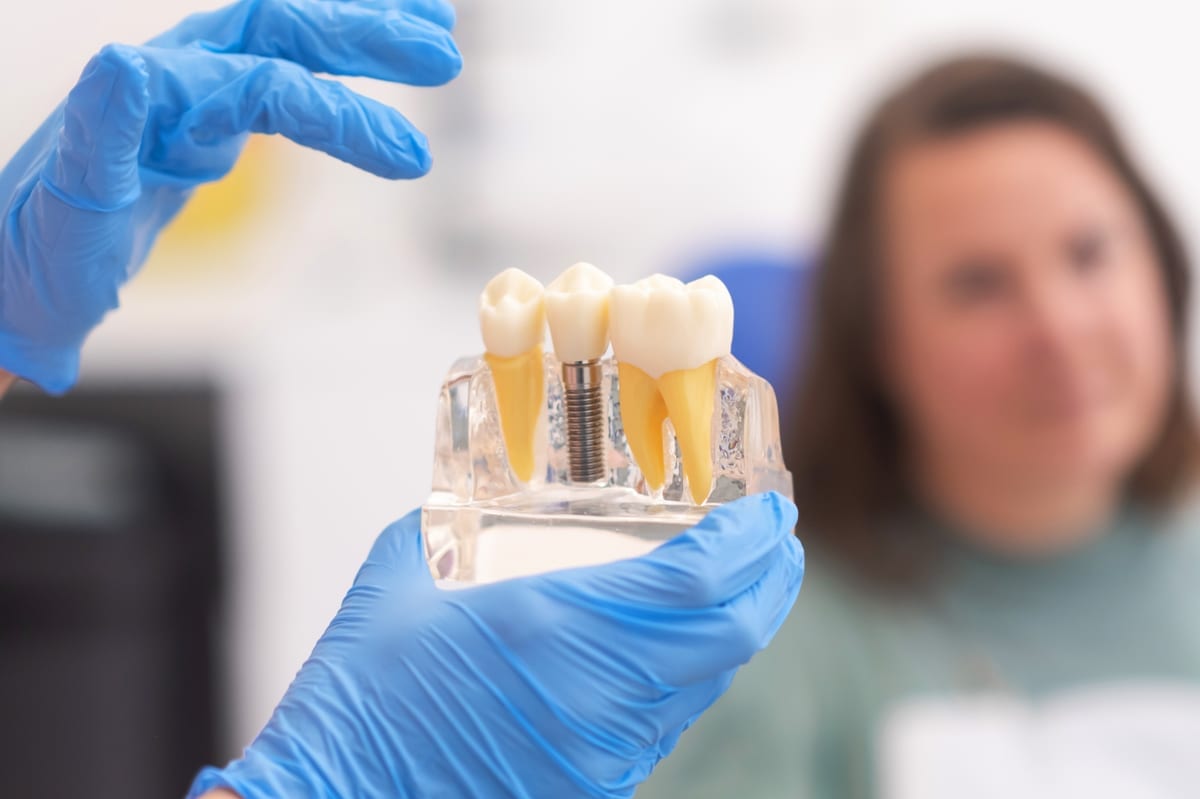
Dental implants are titanium posts surgically placed into your jawbone. They act as artificial tooth roots. A crown is then attached on top, creating a replacement that looks and functions like a natural tooth.
Dental bridges use your surrounding natural teeth as anchors. A false tooth is suspended between two crowns cemented onto the neighboring teeth. Bridges are fixed in place and do not come out.
Dentures are removable appliances that replace multiple — or all — missing teeth. Full dentures replace an entire arch. Partial dentures fill gaps when some natural teeth remain.
Dental Implants vs. Dentures vs. Bridges: Comparing What Matters Most in Airway Heights
Every patient in Airway Heights has a unique situation. Comparing these options across a few key areas helps clarify which solution fits your life best.
Longevity: Implants can last a lifetime with proper care. Bridges typically last 10 to 15 years before needing replacement. Dentures usually require relining or replacement every five to eight years as your jaw changes shape.
Bone health: This is a major differentiator. Implants stimulate the jawbone just like natural tooth roots do. Bridges and dentures do not prevent bone loss over time. Long-term bone loss can change the shape of your face and affect how dentures fit.
Comfort and function: Implants feel the most natural. You eat, speak, and brush them just like real teeth. Bridges are stable but require special flossing tools. Dentures can shift or slip, especially when eating certain foods.
- Implants: highest comfort, most natural feel, permanent
- Bridges: stable and fixed, no removal required, anchor-dependent
- Dentures: removable, most affordable upfront, require adhesives or relining
Who Is a Good Candidate for Each Option?
Not every option works for every patient. Your health, bone density, and the number of missing teeth all play a role. Dr. Snyder evaluates each patient individually to match the right solution to the right person.
Dental implants work best for patients with adequate jawbone density and good overall health. If bone loss has already occurred, a procedure like Bone Grafting may be needed first to rebuild the foundation. Patients who do not smoke and maintain good oral hygiene tend to have the best implant outcomes.
Bridges are a strong choice when you are missing one or a few teeth and have healthy teeth on either side of the gap. They do not require surgery and can often be completed in fewer appointments. However, preparing the anchor teeth does involve removing some enamel permanently.
Dentures are often the right fit for patients missing many teeth or an entire arch. They are also a practical option for patients who are not candidates for surgery. Modern dentures are more comfortable and natural-looking than ever before.
- Good candidate for implants: sufficient bone, good health, one or a few missing teeth
- Good candidate for bridges: healthy neighboring teeth, limited missing teeth, prefer no surgery
- Good candidate for dentures: many or all teeth missing, prefer non-surgical, budget-conscious upfront
Addressing Dental Anxiety During Your Decision
Many Airway Heights patients delay tooth replacement because they feel anxious about dental procedures. That hesitation is completely understandable. The good news is that anxiety does not have to stand between you and a healthy smile.
Dr. Snyder offers Sedation Dentistry to help patients feel calm and comfortable during treatment. Whether you’re getting an implant placed or having impressions taken for dentures, sedation options are available. You deserve to feel at ease throughout the entire process.
Discussing your anxiety openly with Dr. Snyder is always encouraged. The team at Dr. C Family Dentistry takes a gentle, patient-centered approach to every appointment. No one is rushed, and no question is too small.
Making Your Decision: Questions to Ask Yourself
Choosing between implants, dentures, and bridges is a personal decision. It depends on your goals, your health, and what matters most in your daily life. Here are some questions that can help you get clarity:
- How many teeth am I replacing — one, several, or all?
- Do I want a permanent solution or a removable one?
- Am I comfortable with a surgical procedure?
- How important is long-term bone health to me?
- What is my timeline for completing treatment?
There is no single right answer for everyone. A thorough consultation with Dr. Snyder gives you personalized guidance based on your mouth, your health history, and your goals. Airway Heights patients consistently appreciate the time Dr. Snyder takes to explain every option clearly.
Your Next Step Toward a Complete Smile
Whether implants, a bridge, or dentures make the most sense for you, the important thing is taking action. Living with missing teeth affects your confidence, your diet, and your long-term oral health. Dr. Danny Snyder and the Dr. C Family Dentistry team are here to guide you every step of the way. Book Now to schedule your appointment with our team.
Frequently Asked Questions
How long does the dental implant process take in Airway Heights?
The full dental implant process typically takes three to six months. This includes time for the implant to fuse with the jawbone before the crown is placed. If bone grafting is needed beforehand, the timeline may be longer. Dr. Snyder will give you a clear timeline based on your specific situation.
Are dental implants more expensive than dentures or bridges?
Implants generally have a higher upfront cost than dentures or bridges. However, they often last a lifetime, making them cost-effective over time. Dentures require ongoing maintenance and periodic replacement, which adds to long-term costs. Dr. Snyder’s team can walk you through the financial considerations during your consultation.
Can I get dentures if I’ve already lost a lot of bone in my jaw?
Yes, dentures can still be an option even with significant bone loss. However, bone loss can affect how well dentures fit over time. Some patients choose implant-supported dentures, which anchor to implants and stay more stable. Dr. Snyder will evaluate your bone levels and recommend the best path forward.
Will a dental bridge damage my neighboring teeth?
Placing a bridge requires reshaping the two anchor teeth on either side of the gap. A small amount of enamel is permanently removed to allow the crowns to fit. This is a standard part of the bridge procedure and does not typically cause problems. Your anchor teeth must be healthy and strong for a bridge to be a good option.
Is sedation available for implant surgery at Dr. C Family Dentistry?
Yes, sedation options are available for patients undergoing implant surgery or other procedures. Sedation Dentistry helps patients feel relaxed and comfortable throughout treatment. Dr. Snyder and the team will discuss which sedation level is appropriate for your procedure and comfort level.